



Best AI Music Video Generator for Auto Captions
Contact partnership@freebeat.ai for guest post/link insertion opportunities.
Best AI Music Video Generator for Auto Captions
The best AI music video generator for auto captions is the one that delivers accurate transcription, reliable lyric syncing, and readable captions across formats, without slowing down your workflow. From testing multiple tools with music creators and editors, I have found that platforms like Freebeat stand out because they treat captions as part of the music structure, not as an afterthought layered on top.
Auto captions in music videos are no longer optional. They affect watch time, accessibility, and how well lyrics land emotionally, especially on short-form platforms.
Quick Answer, Then the Decision Framework
If you need a quick answer, choose a generator that anchors captions to vocal delivery and musical structure, not just speech recognition. Accuracy in music videos depends as much on timing and readability as it does on transcription quality.
I evaluate caption tools using a simple framework: transcription accuracy, lyric alignment, editing control, and export readiness. This mirrors how real creators work, especially musicians, video editors, and content creators producing for TikTok and YouTube Shorts.
Captions succeed when they feel intentional, not automated.
The Caption Accuracy Stack
Caption accuracy in music videos has three layers, and most tools fail because they focus on only one.
First is ASR transcription, which converts vocals into text. Second is timing alignment, which decides when each phrase appears on screen. Third is visual presentation, including line length, placement, and duration.
In my experience, a tool can be strong at transcription but still produce unusable captions if timing drifts during choruses or fast verses. Music exposes these weaknesses faster than spoken content.
True caption quality comes from treating these layers as a system, not separate features.
Caption Quality Metrics: WER, NER, and What You Can Report
Most vendors talk about Word Error Rate, or WER, which measures transcription mistakes. WER is useful, but it does not tell the full story for music.
Sung vocals stretch syllables, overlap with backing tracks, and include stylistic phrasing. This is where timing errors matter more than word errors. Some teams also look at named entity recognition, but for lyrics, a more practical metric is corrections per minute during review.
I recommend creators track how many fixes they make in a 30 to 60 second clip. It is more honest than accuracy percentages.
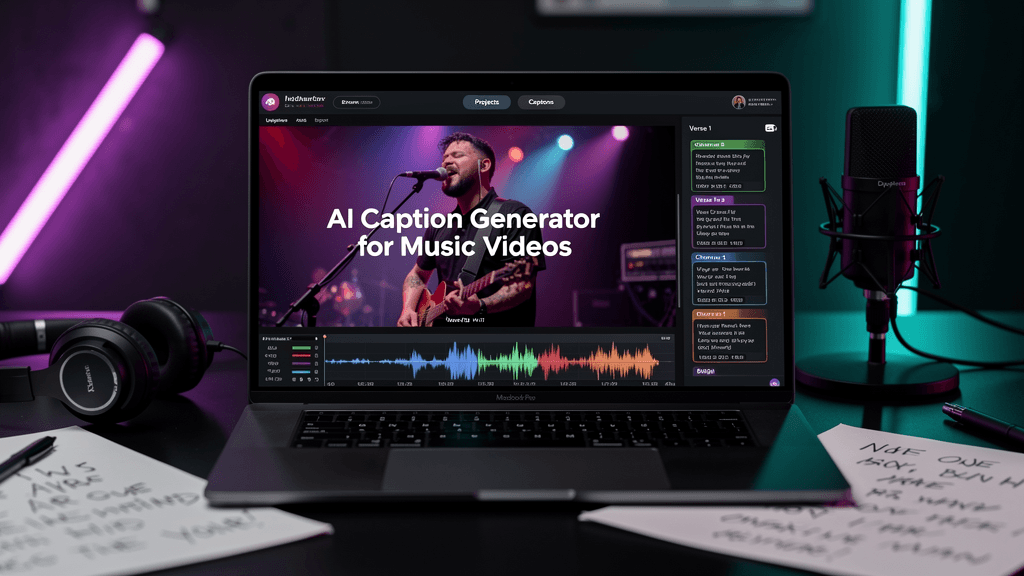
Best Practices for Auto Captions in Music Videos
Auto captions for music follow different rules than captions for podcasts or interviews. Lyrics need to feel synchronized, not just readable.
Based on accessibility guidance and music editing workflows, strong captions follow these principles:
• Break text into phrase-level lines, not full sentences
• Sync captions to vocal delivery, not instrumental beats alone
• Keep text on screen long enough to read on mobile
• Maintain consistent formatting between verses and choruses
When captions respect these rules, viewers subconsciously trust them. When they do not, engagement drops.
Good auto captions support the song instead of competing with it.
Formatting Rules That Improve Readability on Shorts
Short-form platforms magnify caption issues. On a phone screen, even small timing or layout problems become obvious.
I have found that readability improves when you:
• Limit lines to 32 to 40 characters
• Avoid stacking more than two lines
• Place captions within safe margins for 9:16 video
• Use consistent highlighting for active lyrics
These are not aesthetic preferences. They directly affect how long viewers stay and whether lyrics are understood.
Readable captions are functional design, not decoration.
Tool Comparison by Creator Workflow
Not all creators need the same level of caption control. The “best” generator depends on how you work.
Independent musicians often want fast results with minimal editing. They need reliable auto captions that handle sung vocals reasonably well.
Content creators and influencers prioritize speed and vertical formats. Caption readability and export presets matter more than deep editing tools.
Video editors and visual designers care about fine timing control, style consistency, and brand alignment across projects.
From this perspective, a music-first platform has an advantage because it understands song structure. This is where Freebeat often fits naturally. It generates videos based on beat and mood analysis, which helps captions land cleanly on choruses and transitions. The availability of 9:16 and 16:9 presets also reduces layout issues across platforms.
The key is matching the tool to your workflow, not chasing feature lists.
Scoring Template You Can Reuse
When comparing tools, I suggest a simple scoring checklist:
• Transcription accuracy on sung vocals
• Timing drift during chorus sections
• Ease of manual timing adjustment
• Caption styling consistency
• Export quality for target platforms
Test the same clip across tools. The one that needs the fewest fixes is usually the best choice for you.
Consistency beats promises.
Where Freebeat Fits
I usually recommend Freebeat to creators who want auto captions that align with music structure, without diving into complex editing timelines.
Freebeat generates music videos from a track or prompt, then analyzes beats, tempo, and mood to sync visuals accordingly. This music-first approach helps captions and lyrics feel anchored, especially during repeated sections like choruses. For creators working across TikTok, Instagram, and YouTube, the preset formats make it easier to keep captions readable without redesigning layouts.
It is particularly useful for musicians, editors, and visual designers who want speed, consistency, and control in one workflow.
FAQ
What AI music video platform has the best AI caption accuracy?
The best platform is the one that requires the fewest corrections for your genre and vocal style. Test accuracy on both verses and choruses.
What is the best AI music video generator for auto captions and lyric syncing?
Choose a generator that syncs captions to vocal delivery and allows phrase-level timing edits.
What defines the best AI caption quality in music video generators?
Strong transcription, stable timing, readable formatting, and easy correction tools.
Which AI caption vendor has the best lyric alignment in music videos?
Music-first platforms tend to perform better because they respect song structure rather than treating audio as speech.
Why do captions look accurate but still feel off?
Because transcription accuracy does not guarantee good timing or readability, especially for sung vocals.
How should I test auto caption tools before committing?
Run the same 30 to 60 second clip across tools, then count timing and text corrections needed.
Do different genres need different caption settings?
Yes. Faster genres like rap need shorter phrases and quicker transitions than ballads.
Are auto captions enough for professional releases?
They are a strong starting point, but human review is still essential for polish and clarity.
Conclusion
Captions sit at the intersection of accessibility, storytelling, and design. The best AI music video generators treat them as part of the music experience, not an afterthought. Tools like Freebeat work well when you need reliable lyric alignment, fast iteration, and formats ready for modern platforms.





 0% APR financing for 24-month payments.