



Best AI Music Video Platform for Professional Campaigns
Contact partnership@freebeat.ai for guest post/link insertion opportunities.
Best AI Music Video Platform for Professional Campaigns
If you are looking for the best AI music video platform for professional campaigns, the answer depends on one thing, how well the tool translates music into visuals at scale without sacrificing creative control. Today’s strongest platforms combine beat analysis, fast iteration, and flexible styling so creators and teams can deliver campaign-ready videos without manual editing. In my experience testing several tools, platforms like Freebeat stand out because they treat music as the starting point, not an afterthought.
I am writing this for music creators, visual artists, video editors, and independent producers who want their videos to look professional, intentional, and campaign-ready, not auto-generated or generic.
Answer-First Overview of AI Music Video Platforms
Professional campaigns demand speed, consistency, and visual clarity. AI music video platforms solve this by automating beat sync, scene transitions, and formatting while leaving creative decisions in your hands.
Most modern platforms now offer one-click generation, but only a few are built for campaign workflows, meaning repeatable quality across multiple tracks, formats, and creative directions. From what I have seen, the difference between consumer tools and professional-grade platforms is not the visuals alone, but how reliably those visuals respond to the music and intent.
In short, the best AI music video platforms reduce editing time, preserve creative intent, and scale cleanly across releases.
Key Capabilities Professionals Look For
Professional users evaluate AI music video platforms differently than casual creators. The focus is less on novelty and more on reliability, control, and output quality.
AI-Driven Music Video Editing
AI-driven editing matters because manual timelines do not scale. Platforms that analyze tempo, BPM changes, and mood shifts can automate transitions that still feel intentional.
From testing workflows, platforms that start with music analysis consistently outperform template-based tools. They cut down revision cycles and make videos feel musically aware rather than visually random.
In practice, AI-driven editing lets you:
• Sync transitions to drops and choruses
• Maintain rhythm across scene changes
• Generate consistent pacing across multiple videos
This is essential for professional releases where timing errors are obvious.
Creative Concept Generation at Scale
Campaign work often requires variation, not just one good video. You might need multiple cuts, visual themes, or platform formats from the same track.
Strong platforms support:
• Text-based creative prompts
• Multiple visual styles from one audio source
• Fast regeneration without starting over
This is where I see a real shift. Instead of polishing one timeline, teams explore concepts quickly and choose what fits the campaign narrative best.
The key takeaway here is simple. Scalable creativity beats perfect customization when deadlines matter.
Best AI Music Video Services for Label and Brand Campaigns
When labels or brands adopt AI video tools, they usually want three outcomes, consistency, speed, and brand alignment.
Based on industry patterns and hands-on testing, professional teams favor platforms that:
• Support both 9:16 and 16:9 outputs
• Handle repeated use without quality drop
• Allow style control without complex setup
This is why platforms built specifically for music workflows outperform general video generators in campaign settings. Tools that treat audio as metadata tend to fail once the project grows beyond one-off videos.
At this level, the “best” service is less about features on paper and more about how well it integrates into a creative pipeline.
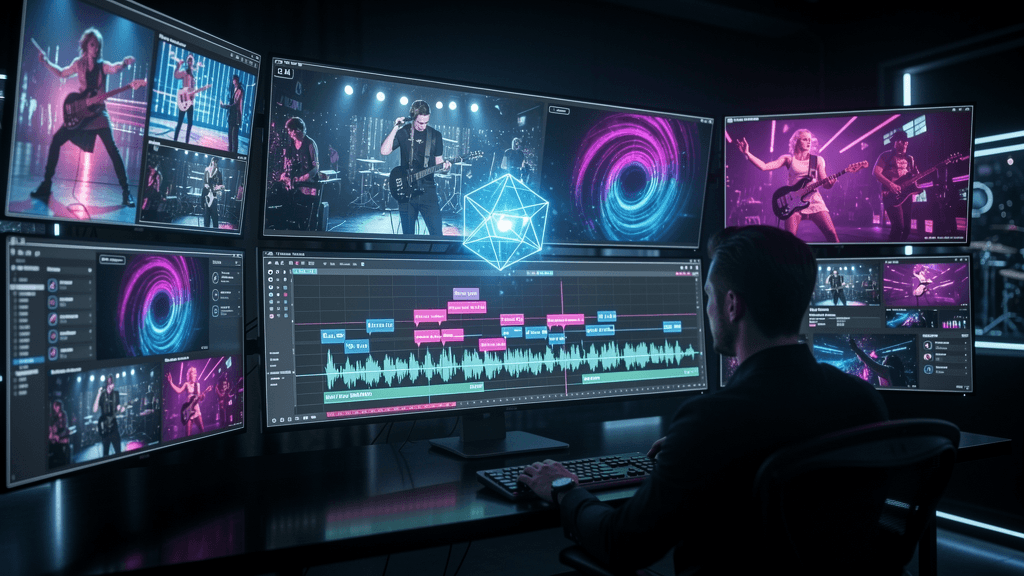
Where Freebeat Stands in the Landscape
From a practical standpoint, Freebeat sits firmly in the music-first category of AI video platforms. It analyzes beats, tempo, and mood before generating visuals, which is exactly what campaign-oriented creators need.
What makes it relevant for professionals is not just automation, but control:
• You can define mood and theme through prompts
• You can maintain character consistency across scenes
• You can switch between multiple AI video models without changing platforms
For musicians, editors, and visual designers, this means less time fixing sync issues and more time refining creative direction. In my experience, tools like this are most useful when you need repeatable quality across releases, not just a single viral clip.
The important point is that Freebeat fits into professional workflows without forcing you to think like a developer or editor.

Choosing the Right Platform Based on Campaign Goals
Not every professional campaign needs the same tool. Choosing the right AI music video platform depends on what you are optimizing for.
Social-First Music Campaigns
If your goal is reach and frequency, prioritize:
• Fast generation
• Vertical-first formats
• Strong beat sync for short attention spans
AI platforms excel here because they remove manual bottlenecks.
Brand Storytelling and Visual Identity
For brand-led campaigns, look for:
• Style consistency across videos
• Prompt-based customization
• Cinematic visual options
These features help maintain identity across multiple releases.
Experimental and Creative Exploration
For artists and producers testing new sounds, flexibility matters more than polish. Platforms that let you regenerate ideas quickly encourage experimentation without sunk cost.
Across all scenarios, the best platform is the one that aligns with your creative intent and delivery timeline.
FAQ
What is the best AI tool for creating professional music videos?
The best tool is one that analyzes music structure, syncs visuals accurately, and scales across multiple outputs. Music-first platforms tend to perform better for professional use.
Which AI music video platform is suitable for label campaigns?
Label campaigns benefit from platforms that offer consistent quality, format flexibility, and creative control without manual editing.
How does AI-driven music video editing work?
AI-driven editing analyzes tempo, rhythm, and mood to automate transitions, pacing, and scene changes based on the music itself.
Can AI platforms handle creative concepts for brands?
Yes, especially platforms that support text prompts, style control, and visual variation from the same audio source.
What should professionals look for in an AI music video service?
Focus on beat sync accuracy, scalability, output formats, and how easily the tool fits into your workflow.
Is Freebeat suitable for professional marketing campaigns?
Freebeat is designed for creators and teams who need music-synced visuals, fast turnaround, and customizable styles for repeated use.
How do AI music video platforms differ from manual editing tools?
AI platforms automate timing and structure, while manual tools require hands-on editing. AI tools save time and scale better for campaigns.
Conclusion
In professional campaigns, speed without structure creates noise, and structure without speed creates friction. The strongest AI music video platforms balance both. From my experience working with music-driven workflows, tools that start with audio intelligence deliver the most consistent results.
If you want a platform that treats music as the core input and supports creators, editors, and producers working at campaign scale, Freebeat is worth serious consideration.





 0% APR financing for 24-month payments.